









By Kelly Edgar | The Virtual Controller™
The Back Office Crisis Nobody Plans For
Dealer question for today.
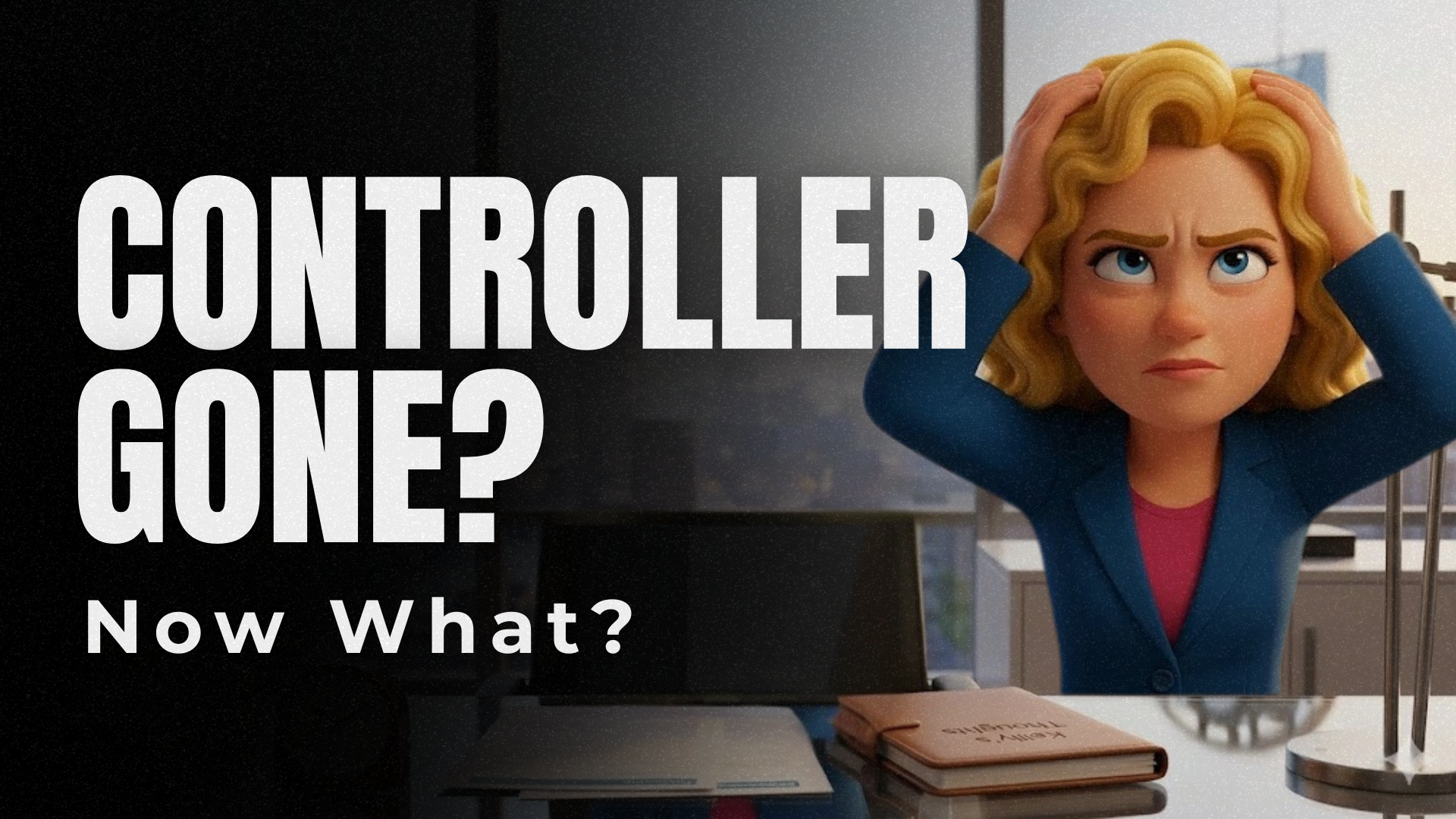
What happens when your controller leaves?
Maybe they will retire.
Maybe they will move on.
Maybe they just burn out.
It happens all the time.
And when it does, most dealerships suddenly realize something:
A lot of the accounting knowledge lived in one person’s head.
The month-end slows down.
Schedules stop getting updated.
Financial statements start looking… questionable.
Real talk.
This isn’t a staffing problem.
It’s a systems problem.
And that’s exactly why The Virtual Controller model exists.
Not to replace dealership teams.
But to give dealerships financial stability even when people change.
The Virtual Controller Framework
Stabilizing Dealership Accounting Operations
The Virtual Controller operates using a two-part financial support structure.
This model allows dealerships to maintain:
• consistent daily accounting operations
• controller-level financial oversight
The system includes two interconnected components:
Operational Accounting Support
Controller-Level Financial Leadership
Together, these layers create a stable financial structure inside the dealership.
Even during staffing transitions.
Operational Accounting Support
Keeping the Back Office Running
The first layer focuses on daily accounting operations.
These are the tasks that keep dealership accounting moving every day.
Examples include:
• accounts payable processing
• payroll administration
• reconciliation preparation
• transaction monitoring
• schedule updates
When these processes run smoothly, the accounting office stays organized.
But execution alone doesn’t guarantee accuracy.
And that’s where many dealerships struggle.
Because daily work still needs controller oversight.
Controller-Level Financial Leadership
Making Sure the Numbers Are Real
Controller oversight focuses on the financial structure of the dealership.
This includes:
• financial statement accuracy
• internal controls
• reconciliation verification
• reporting clarity
• audit readiness
Instead of waiting for problems to surface later…
We review the accounting structure continuously.
Financial Statement Accuracy
A dealership’s financial statement should be trustworthy.
But that only happens when supporting schedules match the numbers.
We regularly review:
• trial balances
• account schedules
• general ledger detail
• expense classifications
Because if schedules don’t tie out…
The financial statement is just a guess.
Cash Flow Visibility
One of the most common questions dealers ask is:
“Where is the money actually going?”
Dealerships generate large amounts of revenue.
But without clear financial insight, cash flow can still feel confusing.
We help dealerships build visibility through:
• expense analysis
• financial reporting clarity
• operational financial insights
That helps leadership make better financial decisions.
Internal Controls
Protecting the Dealership from Risk
Weak accounting controls can lead to serious issues.
We help strengthen areas such as:
• DMS permissions
• approval structures
• reconciliation processes
• deposit tracking
These controls reduce the risk of:
• accounting errors
• money leaks
• fraud exposure
And honestly…
Many dealerships discover these gaps only after a problem occurs.
When Controller Turnover Happens
Controller turnover creates more disruption than most dealers expect.
Here’s what typically happens.
The controller leaves.
Nobody fully understands the reconciliation process.
Month-end takes longer.
And leadership loses confidence in the numbers.
The Virtual Controller system provides continuity during these transitions.
Even if staffing changes internally…
The financial oversight structure stays intact.
Integration
Where Operations and Oversight Work Together
The real power of The Virtual Controller system comes from integration.
Daily accounting activity feeds into financial oversight.
Financial oversight improves operational workflows.
Leadership receives clearer financial insight.
This creates a continuous improvement cycle.
Instead of fixing the same accounting problems every month…
The system prevents them from repeating.
Automation & Process Structure
Modern dealership accounting requires strong workflows.
We support systems that improve:
• reporting consistency
• reconciliation tracking
• documentation organization
• audit preparation
Automation reduces reliance on manual processes.
Which leads to:
• fewer accounting mistakes
• faster month-end closes
• stronger accountability
Why Dealerships Are Rethinking the Controller Role
The old model relied heavily on one person.
One controller managing everything.
But today’s dealership environment is more complex.
Systems are larger.
Compliance is stricter.
Financial reporting expectations are higher.
More dealerships are moving toward hybrid accounting support models.
Where internal staff handle daily operations…
And a virtual controller team provides financial leadership.
The result?
More stability.
Better reporting.
Less chaos in the back office.
Final Word from Kelly
I spent more than a decade working inside dealership accounting offices.
And I can tell you one thing for sure.
Most accounting problems aren’t complicated.
They’re just the result of systems breaking down over time.
When the right processes and oversight are in place…
Month-end gets easier.
Financial statements become reliable.
And dealership leadership can actually trust the numbers.
That’s what The Virtual Controller is built to deliver.
Ready to Strengthen Your Dealership’s Accounting System?
If your accounting office feels stretched…
Or you’re worried about what happens when key staff leave…
Let’s talk.
👉 Click the link to book a free call with my virtual controller team.